
Homebuyer Tips
Flat Inspection Checklist: What to Check Before Buying a Flat in West Bengal
Planning to buy a flat in West Bengal? Use this practical inspection checklist to evaluate construction quality, legal documents, amenities, connectivity, hidden costs, and important questions before booking.
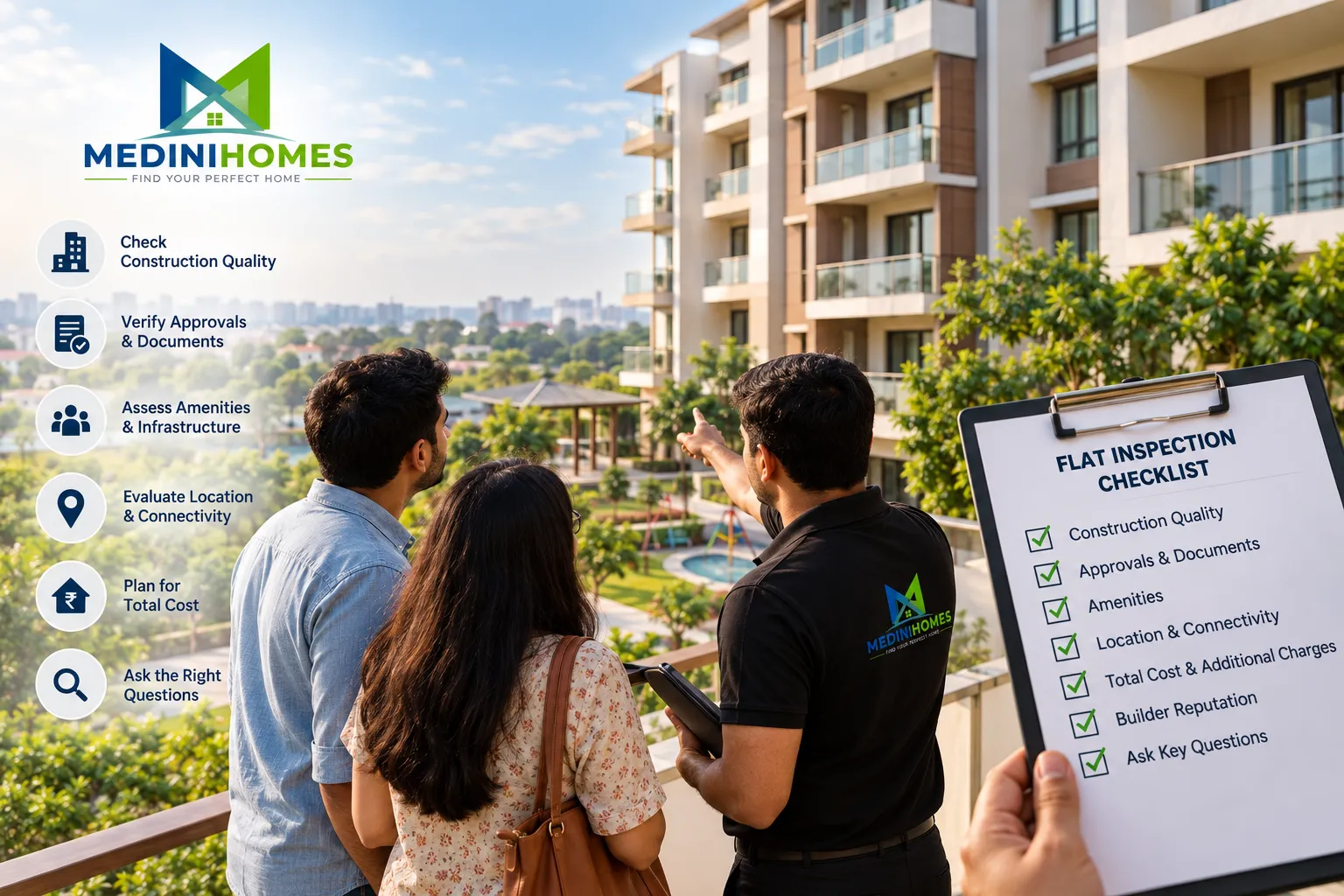
Buying a flat in West Bengal is a major financial decision, and a property that looks attractive during a site visit may still have construction defects, incomplete documentation, inconvenient surroundings, or unexpected costs.
Before booking a flat, inspect the property carefully, verify its legal and regulatory details, understand the total purchase cost, and evaluate whether the location meets your family's long-term needs.
This practical checklist will help you assess residential properties in Midnapore and nearby areas of West Medinipur before making a commitment.
1. Inspect the Construction Quality
A flat's appearance does not always reflect its construction quality. Fresh paint, modern flooring, and attractive interiors can conceal problems that become expensive to repair later.
What to inspect inside the flat
- Walls and ceilings: Look for cracks, damp patches, peeling paint, and signs of water seepage.
- Flooring: Check whether tiles are properly fitted, level, and free from cracks or hollow sounds.
- Doors and windows: Open and close them to check alignment, locking mechanisms, and gaps.
- Electrical fittings: Inspect switchboards, sockets, wiring arrangements, and the location of electrical points.
- Plumbing: Check taps, drainage, water pressure, and visible pipe connections wherever possible.
- Bathrooms: Examine waterproofing indicators, ventilation, drainage slopes, and moisture around fittings.
- Balconies: Inspect railings, drainage outlets, floor slopes, and signs of seepage.
If the flat is still under construction, ask the developer about the materials being used, construction specifications, and quality-control procedures.
For resale properties or completed flats showing significant cracks or seepage, consider hiring a qualified civil engineer for an independent inspection.
2. Verify Property Documents and Approvals
A visually appealing flat should never be treated as a substitute for proper documentation.
Before making a substantial financial commitment, request the relevant documents and have an independent property lawyer examine them.
Important documents to request
- Title deed: To help establish the ownership history of the land or property.
- Approved building plan: To compare the sanctioned construction with the actual building.
- Land-related records: To check ownership details and relevant land information.
- Building permissions: To confirm the approvals applicable to the project.
- Completion or occupancy certificate: Where applicable, particularly for completed buildings.
- Draft agreement for sale: To review the payment schedule, possession terms, specifications, and obligations.
- Relevant tax and utility records: Particularly when purchasing a resale property.
- Encumbrance and mortgage information: To identify potential claims or financial liabilities affecting the property.
The exact documentation required depends on whether the flat is under construction, newly completed, or being purchased from an existing owner.
Check RERA registration
For projects required to be registered under the applicable law, verify the project directly through the West Bengal Real Estate Regulatory Authority.
Compare the developer's information with the official project record, including:
- Project name and registration number
- Promoter or developer details
- Registered project location
- Declared completion timeline
- Available sanctioned plans and project disclosures
- Registration status and relevant updates
Not every small project necessarily requires RERA registration. If a developer claims that a project is exempt, ask for the legal basis and have it independently verified.
The West Bengal Housing Department provides additional information about the state's RERA framework.
Remember that RERA registration is an important verification step, not a guarantee of construction quality or freedom from every legal dispute.
3. Evaluate the Flat's Layout and Usable Space
Two flats advertised with similar areas may offer very different living experiences.
Instead of relying only on the advertised square footage, examine how much space your family can actually use.
Check the following
- Bedroom dimensions and furniture placement
- Living and dining room proportions
- Kitchen workspace and storage possibilities
- Bathroom size and accessibility
- Balcony dimensions
- Natural lighting and ventilation
- Privacy between neighbouring flats
- Space for washing machines and other appliances
Ask the developer to explain the carpet area and how it differs from other area measurements used in marketing materials.
Measure important rooms where possible and compare them with the approved floor plan and contractual specifications.
Consider the direction and surroundings
Visit the property during daylight hours.
Check whether nearby buildings block sunlight, whether windows provide adequate airflow, and whether the flat faces a busy road or another source of noise.
A flat with an attractive floor plan may still feel uncomfortable if its rooms receive insufficient natural light or ventilation.
4. Examine Water Supply, Drainage and Electricity
Basic infrastructure can significantly influence everyday living.
In Midnapore, buyers should examine the actual services available at a specific building rather than assuming that every residential locality has identical infrastructure.
Water supply
Ask the following questions:
- What is the primary source of water?
- Is there an overhead or underground storage tank?
- Is water available consistently?
- Are there separate arrangements for drinking water?
- Who maintains the pumps and storage systems?
- Is there any history of water shortages?
Drainage and waterlogging
Inspect the surrounding roads and drainage outlets.
Ask nearby residents or shopkeepers whether the area experiences water accumulation during heavy rainfall.
If possible, revisit the location during the monsoon season.
Check whether the building entrance, parking area, and ground-floor spaces are vulnerable to water entering during heavy rain.
Electricity and backup
Verify the electrical connection arrangements and ask whether backup power is available.
If the building advertises power backup, clarify exactly what it supports.
For example, backup electricity may cover only common-area lighting and lifts rather than every electrical appliance inside individual flats.
5. Check the Building's Amenities and Common Areas
Amenities can improve convenience, but buyers should distinguish between facilities that are already operational and those that are merely proposed.
Inspect these facilities
- Lift availability and maintenance arrangements
- Staircase width and condition
- Common-area lighting
- Parking access and vehicle movement
- Building entrance and security arrangements
- Fire-safety installations and access routes
- Waste collection arrangements
- Rooftop access and maintenance
- Water storage and pumping systems
Ask whether the building has a residents' association or an established process for managing common expenses.
For projects under construction, request written confirmation of promised amenities and their expected delivery.
Do not assume that facilities shown in brochures or promotional renderings will automatically be included in the final handover.
6. Evaluate the Location and Connectivity
A good flat in an inconvenient location may create difficulties for years.
Before choosing a property in West Bengal, consider the places you and your family visit regularly.
Important connectivity considerations
- Distance and practical travel time to nearest railway station/metro
- Access to major roads and public transport
- Travel time to workplaces or business locations
- Proximity to schools and colleges
- Access to hospitals and medical facilities
- Availability of grocery stores, pharmacies, and markets
- Road condition and street lighting
- Availability of transport during early mornings and evenings
Do not evaluate connectivity using distance alone.
A property that appears close to an important destination on a map may take longer to reach because of narrow roads, railway crossings, traffic, or indirect routes.
Visit the neighbourhood more than once
Try visiting the location at three different times:
- Morning: Observe traffic, school-related movement, and commuting conditions.
- Evening: Check street lighting, transport availability, and neighbourhood activity.
- After heavy rainfall: Assess drainage, road conditions, and water accumulation where practical.
Speak with nearby residents when possible. Their experience can reveal practical concerns that are not apparent during a short property tour.
7. Calculate the Total Cost of Buying the Flat
The advertised flat price is not necessarily the final amount you will spend.
Before paying a booking amount, request a detailed written cost breakdown.
Costs to clarify
- Base price of the flat
- Parking charges, if applicable
- Floor-rise or location-related charges, if any
- Applicable GST, if any
- Stamp duty and registration expenses
- Legal and documentation expenses
- Maintenance deposits or advance payments
- Utility connection charges
- Applicable society or association charges
- Interior work and furnishing expenses
- Home-loan processing and related charges, where applicable
Ask which charges are included in the quoted price and which will be billed separately.
Taxes and statutory charges depend on the transaction and applicable rules. Verify the current amounts with the relevant authorities or qualified professionals rather than relying on an old estimate.
Plan for expenses after possession
Your financial planning should also account for recurring costs.
These may include monthly maintenance, electricity, water-related charges, repairs, parking maintenance, and future common-area expenses.
A flat that fits your purchase budget should also remain affordable to maintain.
8. Investigate the Developer's Track Record
The developer's history can provide useful information about construction standards, communication, and project delivery.
Questions worth investigating
- Has the developer completed previous residential projects?
- Can you visit any completed buildings?
- Were previous projects delivered according to their declared timelines?
- How are construction defects and complaints handled?
- Are buyers provided with clear written agreements?
- Are promised amenities documented?
- Is there an established process for post-possession support?
Where possible, speak directly with residents of completed projects.
Ask about water seepage, maintenance, lift reliability, construction defects, and the developer's response to complaints.
Online reviews can provide additional context, but individual claims should be independently assessed.
9. Understand the Booking and Payment Terms
Before paying any booking amount, obtain a written explanation of the terms.
Clarify these points
- Is the booking amount refundable, and under what conditions?
- What happens if your home-loan application is rejected?
- What is the complete payment schedule?
- Are payments linked to construction milestones?
- What is the contractual possession date?
- What happens if possession is delayed?
- What specifications and amenities are included?
- How will changes to the flat or project be handled?
- What is the procedure for reporting defects after possession?
Make payments only through documented channels and obtain proper receipts.
Avoid relying on verbal promises about possession dates, discounts, parking, or additional facilities.
Have a qualified lawyer review the agreement before signing.
10. Look for Warning Signs Before Booking
Some warning signs deserve additional investigation, even when a property otherwise appears attractive.
Potential red flags
- The seller refuses to provide essential property documents.
- The developer's identity or ownership information is unclear.
- The actual construction differs materially from the approved plan.
- Promised amenities are not documented.
- The seller pressures you to make an immediate payment.
- The final cost breakdown is incomplete or inconsistent.
- The possession timeline is unclear.
- There are visible signs of significant structural damage or recurring seepage.
- A required regulatory registration cannot be verified.
- The developer avoids answering questions about approvals, mortgages, or legal disputes.
One warning sign does not automatically mean that a property is unsuitable. However, unresolved legal, structural, or financial concerns should be investigated before proceeding.
11. A Practical Checklist for Your Property Visit
Carry this checklist when visiting a flat in Midnapore.
Property condition
- Inspect walls, ceilings, and flooring.
- Test doors, windows, and locks.
- Examine bathrooms and plumbing.
- Check natural light and ventilation.
- Look for cracks, dampness, and seepage.
Building infrastructure
- Check lift and staircase conditions.
- Confirm water and electricity arrangements.
- Inspect drainage and parking.
- Verify common-area maintenance.
- Review fire-safety arrangements.
Legal verification
- Request ownership and title documents.
- Compare the building with sanctioned plans.
- Check applicable RERA registration.
- Request relevant completion or occupancy documentation.
- Have an independent lawyer review the paperwork.
Financial verification
- Obtain the complete written price breakdown.
- Clarify booking and cancellation conditions.
- Understand the payment schedule.
- Estimate registration and other transaction expenses.
- Calculate ongoing maintenance costs.
Location assessment
- Check transport and railway connectivity.
- Visit nearby essential services.
- Examine road and drainage conditions.
- Assess noise, lighting, and neighbourhood activity.
- Consider your family's future requirements.
12. Questions to Ask Before Making Your Final Decision
Before booking, ask yourself:
- Does this flat provide enough usable space for my family?
- Have I independently verified the important legal documents?
- Are the promised amenities included in writing?
- Can I comfortably afford the total purchase and ongoing costs?
- Is the location convenient for my daily routine?
- Have I checked the building's water, drainage, and electrical arrangements?
- Do I understand the booking, cancellation, and possession terms?
- Have I compared this property with other suitable options?
- Are there any unresolved construction or documentation concerns?
- Would this property still meet my needs several years from now?
If several answers remain uncertain, gather more information before committing.
Final Thoughts
Buying a flat should involve more than comparing prices, photographs, and floor plans.
Construction quality, legal documentation, reliable utilities, neighbourhood conditions, total ownership costs, and developer credibility all deserve careful consideration.
Visit shortlisted properties personally, ask for written documentation, compare multiple options, and seek independent legal or technical advice where necessary.
A well-informed purchase decision begins with understanding not only what a property offers today, but also how comfortably and securely it can serve your needs in the years ahead.
You can explore residential properties and available listings through MediniHomes, then arrange site visits and carry out your own independent verification before booking.