
Buying Guides
Flat vs House in West Bengal: Which Should You Buy?
Confused between buying a flat and a house in West Bengal? Compare ownership, costs, maintenance, privacy, amenities, financing, and long-term value to make the right decision.
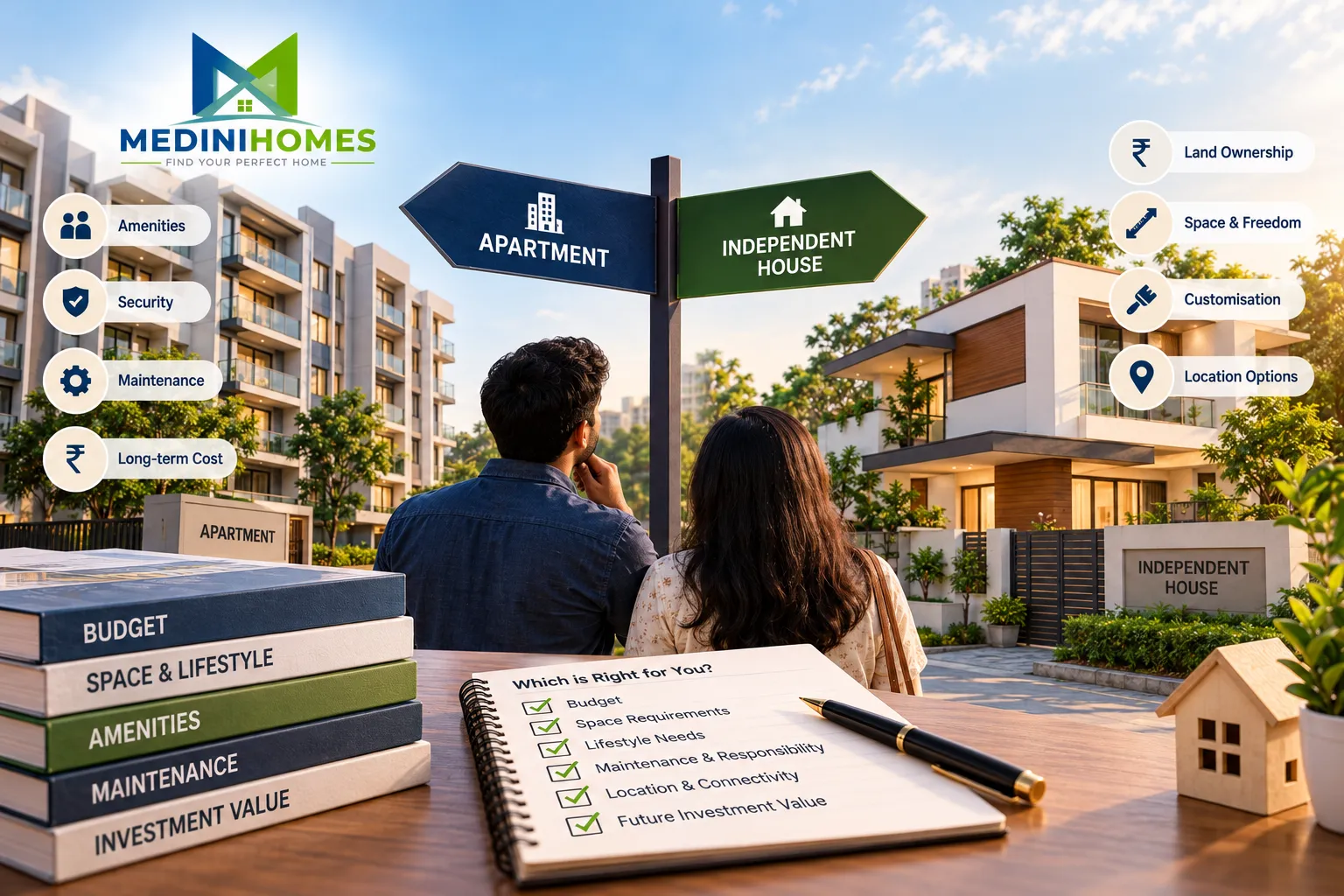
Choosing between a flat and a house is one of the most important decisions when buying residential property in West Bengal.
A flat generally offers shared amenities, managed common spaces, and potentially lower individual maintenance responsibilities. A house provides greater control over the property, more flexibility for modifications, and often a more private living environment.
Neither option is automatically better. The right choice depends on your budget, preferred location, family size, lifestyle, maintenance capacity, and long-term plans.
Whether you are considering a property in Kolkata, Howrah, the surrounding suburbs, Midnapore, or Kharagpur, understanding these differences can help you make a more informed decision.
1. Understanding the Difference Between a Flat and a House
Before comparing prices or amenities, it is important to understand what you are actually purchasing.
What is a flat?
A flat is a residential unit within a building containing multiple homes.
Flat owners generally have rights over their individual units and specified rights or interests in common areas, depending on the applicable ownership structure and legal documents.
Common facilities may include:
- Staircases and lifts
- Shared parking areas
- Building entrances and corridors
- Water storage and pumping systems
- Security arrangements
- Gardens or recreational spaces
- Shared electrical and maintenance infrastructure
The building may be managed by a residents' association, housing society, developer-appointed facility manager, or another legally recognised management body.
What is a house?
A house, in this comparison, refers to a standalone residential building, typically constructed on an individual plot of land.
Depending on the transaction, the buyer may acquire ownership rights over both the house and the land beneath it.
Houses can include single-storey homes, multi-storey residences, and properties designed to accommodate multiple generations of a family.
However, not every property advertised as an independent house comes with clear or exclusive ownership of the underlying land.
Buyers must verify the title, land classification, boundaries, access rights, and other relevant documents before proceeding.
2. Property Ownership: What Do You Actually Own?
Ownership structure is one of the biggest differences between flats and houses.
Flat ownership
When purchasing a flat, buyers generally acquire rights over a specific residential unit along with the applicable interest or rights in common areas.
The precise nature of these rights depends on the registered documents and legal structure of the property.
Before purchasing, verify:
- The ownership and title documents
- The carpet area of the flat
- Rights relating to common areas
- Parking rights and their legal basis
- Applicable association or maintenance obligations
- Restrictions on structural modifications
- The terms governing transfer or resale
Under the Real Estate (Regulation and Development) Act, 2016, carpet area refers to the net usable floor area of a flat, subject to the statutory inclusions and exclusions.
Understanding carpet area is important because an advertised total area may not represent the space available for everyday use.
House ownership
A house may provide more direct control over the building and its land, but this depends on the legal ownership structure.
Buyers should examine:
- Land title and ownership history
- Plot boundaries and survey records
- Land-use classification
- Access roads and rights of way
- Building plan approval
- Existing mortgages or encumbrances
- Municipal or local authority records
- Applicable construction restrictions
A qualified property lawyer should verify these documents before a purchase agreement is finalised.
Key takeaway: Houses may provide greater ownership control, but only when the legal title and associated rights are properly established.
3. Purchase Price and Overall Affordability
Many buyers assume that flats are always cheaper than houses.
In practice, affordability depends heavily on location, plot size, building age, construction quality, amenities, and market demand.
Flat costs
The purchase price of a flat may reflect:
- Location and neighbourhood
- Carpet area and layout
- Building age and condition
- Floor level and accessibility
- Parking arrangements
- Available amenities
- Developer reputation
- Construction and finishing specifications
A flat in a highly connected part of Kolkata may cost more than a house in a less developed location.
Therefore, comparing only the property type without considering location can be misleading.
House costs
The cost of a house may include the value of both land and construction.
Factors affecting its price include:
- Plot size
- Road frontage and access
- Land location
- Building condition
- Construction quality
- Age of the structure
- Available utilities
- Future development possibilities
An older house may appear affordable initially but require significant expenditure on structural repairs, waterproofing, electrical systems, or renovation.
Compare the complete purchase cost
For either property type, calculate:
- Agreed purchase price
- Applicable stamp duty and registration charges
- Legal and documentation expenses
- Applicable taxes
- Home-loan processing and related costs
- Immediate repairs or interior work
- Utility connection expenses
- Parking or maintenance-related charges, where applicable
Request a written breakdown before making a financial commitment.
4. Maintenance: Shared Responsibility vs Individual Control
Maintenance is one of the most important long-term differences between these property types.
Maintenance in flats
Flat owners commonly contribute towards maintaining shared facilities.
These expenses may cover:
- Lift servicing
- Common-area electricity
- Security personnel
- Cleaning and housekeeping
- Water pumps and storage systems
- Building repairs
- Common-area painting
- Landscaping
- Shared equipment maintenance
The amount and structure of maintenance charges vary between buildings.
Before purchasing, ask whether there is an established maintenance fund and whether major future repairs may require additional contributions.
Maintenance in houses
Homeowners generally have greater responsibility for maintaining their own buildings.
Potential expenses include:
- Roof repairs and waterproofing
- Exterior painting
- Plumbing and electrical maintenance
- Boundary wall repairs
- Drainage maintenance
- Water pumps and storage tanks
- Structural repairs
- Security arrangements
A house may not involve regular flat association charges, but that does not mean maintenance is free.
Major repairs can create substantial expenses, particularly in older properties.
Which is better?
A flat may suit buyers who prefer organised management of shared infrastructure.
A house may suit those who want direct control over repairs and are comfortable managing contractors, maintenance schedules, and related expenses.
5. Privacy, Space and Lifestyle
Your preferred lifestyle should play a major role in the decision.
Living in a flat
Flats can provide a convenient residential environment, particularly for working professionals, smaller families, and buyers who prefer shared facilities.
Potential advantages include:
- Neighbours within the same residential community
- Shared amenities
- Managed common spaces
- Potentially easier access to security arrangements
- Less individual responsibility for shared infrastructure
However, living in a flat can involve limitations.
Noise from adjoining units, shared walls, building regulations, and restrictions on modifications may affect your experience.
Living in a house
Houses often provide more privacy and flexibility.
Depending on the property, advantages may include:
- Separate entrances
- Private outdoor space
- Greater control over interior layouts
- More flexibility for family arrangements
- Space for pets, gardening, or hobbies
- Reduced dependence on shared building facilities
However, privacy also depends on plot size, neighbouring construction, road conditions, and the surrounding environment.
A house in a densely developed neighbourhood may not necessarily be quieter than a flat.
6. Security and Safety Considerations
Both flats and houses can provide secure living environments when appropriate measures are in place.
Flat security
Some residential buildings offer:
- Controlled entry points
- Security personnel
- CCTV surveillance
- Visitor management
- Common-area lighting
- Fire-safety installations
These facilities vary significantly between developments.
Buyers should verify which systems are operational rather than relying on promotional descriptions.
House security
Homeowners may need to arrange their own security measures.
These could include:
- Secure doors and windows
- Boundary walls and gates
- Exterior lighting
- CCTV systems
- Alarm systems
- Appropriate fire-safety equipment
Security arrangements should be evaluated alongside the actual neighbourhood conditions.
For both property types, inspect emergency access, electrical safety, and applicable fire-safety provisions.
7. Amenities and Everyday Convenience
Modern residential developments may offer shared facilities that would be expensive or impractical to maintain individually.
Depending on the project, these can include:
- Lifts
- Security services
- Community halls
- Children's play areas
- Fitness facilities
- Landscaped spaces
- Shared parking
- Backup power for specified facilities
Not every residential complex includes these amenities.
For under-construction projects, buyers should verify which facilities are included in the approved project details and contractual documents.
House amenities
A house may offer space for private facilities such as:
- A garden
- Private parking
- Rooftop seating
- Additional storage
- A home office
- Dedicated recreational space
However, creating and maintaining these facilities is generally the owner's responsibility.
The better option depends on whether you prefer shared convenience or individually controlled space.
8. Location and Connectivity in West Bengal
Location often matters more than the distinction between a flat and a house.
For buyers in Kolkata and its surrounding urban areas, daily commuting requirements can strongly influence the choice.
Important location factors
- Distance to railway or metro stations
- Access to major roads
- Travel time to workplaces
- Availability of public transport
- Nearby hospitals and schools
- Access to markets and essential services
- Road condition and drainage
- Neighbourhood safety and lighting
Buyers considering properties in Midnapore, Kharagpur, or other regional towns should apply the same practical criteria.
A larger house farther from essential services may be less convenient than a smaller flat near workplaces, schools, and transport.
Evaluate the actual journey
Do not rely only on the distance shown on a map.
Visit the area during normal commuting hours and assess:
- Traffic conditions
- Public transport availability
- Road accessibility
- Travel time during busy periods
- Waterlogging after heavy rainfall
- Access to emergency services
A property should fit your everyday routine, not just your preferred floor plan.
9. Customisation and Future Expansion
A house can offer greater flexibility for buyers who expect their housing needs to change.
House flexibility
Depending on the property and applicable permissions, owners may be able to:
- Redesign interior spaces
- Renovate rooms
- Modify non-structural layouts
- Create additional functional areas
- Expand the building where legally permitted
However, owning land does not automatically provide permission to construct additional floors or extend the building.
Any proposed expansion must comply with applicable planning rules, building permissions, structural requirements, and other restrictions.
Flat modifications
Flat owners may be able to renovate interiors, but structural changes and modifications affecting common areas can be restricted.
Before purchasing, clarify:
- Which alterations are permitted
- Whether association approval is required
- Whether structural walls can be modified
- Rules concerning exterior installations
- Restrictions affecting balconies and common areas
Key takeaway: Buyers prioritising future expansion may prefer a house, provided the land, structure, and applicable permissions support their plans.
10. Home Loans and Financing
Both flats and houses may be eligible for housing finance, subject to lender requirements.
However, financing depends on the specific property, borrower eligibility, legal documentation, and lender policies.
Flat financing
Lenders may examine:
- Developer and project documentation
- Property title
- Approved building plans
- Construction status
- Required regulatory registration
- Property valuation
- Borrower income and repayment capacity
A project being advertised as approved by a particular lender should not replace independent legal verification.
House financing
For a house, lenders may closely examine:
- Land ownership
- Building approvals
- Property age and condition
- Access and location
- Property valuation
- Existing encumbrances
- Required local authority documentation
Older buildings or properties with documentation issues may face additional scrutiny.
What should buyers compare?
Before selecting a lender, examine:
- Interest rate and whether it is fixed or floating
- Loan tenure
- Estimated monthly EMI
- Processing fees
- Other applicable charges
- Prepayment conditions
- Insurance-related requirements
- Total repayment amount
Compare the complete cost of borrowing rather than choosing a loan based only on the advertised interest rate.
11. Resale Value and Long-Term Investment Potential
Buyers often ask whether flats or houses provide better long-term returns.
There is no universal answer.
Property value depends on several factors, including location, demand, infrastructure, legal clarity, building condition, and future development.
Flat resale considerations
Important factors include:
- Building age
- Maintenance quality
- Location and connectivity
- Available amenities
- Association management
- Construction condition
- Demand for similar units
- Legal documentation
A well-maintained flat in a desirable location may remain attractive to future buyers.
However, ageing infrastructure and increasing repair costs can influence resale demand.
House resale considerations
A house's value may be influenced by:
- Land location and size
- Road access
- Ownership clarity
- Plot dimensions
- Construction condition
- Redevelopment possibilities
- Neighbourhood development
- Local buyer demand
Land value and building value should be considered separately.
Buildings can deteriorate over time, while land values may rise or fall depending on local market conditions.
Neither property type guarantees appreciation.
Think beyond resale prices
For owner-occupiers, long-term value also includes:
- Daily convenience
- Housing stability
- Maintenance affordability
- Comfort
- Accessibility
- Suitability for changing family needs
A property that serves your family well can offer meaningful practical value even when future market returns are uncertain.
12. Legal Verification Before Buying
Whether you choose a flat or a house, legal verification is essential.
For flats
Request and examine:
- Title documents
- Approved building plans
- Relevant construction permissions
- Applicable RERA registration
- Agreement for sale
- Completion or occupancy documentation, where applicable
- Parking and common-area rights
- Maintenance obligations
For projects required to register under RERA, buyers can check project information through the West Bengal Real Estate Regulatory Authority.
The authority provides access to registered project information and relevant disclosures.
Not every property transaction requires project registration. Applicability depends on the nature and circumstances of the development.
For houses
Verify:
- Land title and ownership history
- Plot boundaries
- Land-use classification
- Building plan approvals
- Relevant municipal or local permissions
- Existing loans or encumbrances
- Access rights
- Applicable tax records
- Any known ownership disputes
Consider obtaining an independent legal opinion and, where appropriate, a technical inspection from a qualified engineer.
Never rely solely on verbal assurances from a seller, broker, or developer.
13. Which Property Type Is Better for Different Buyers?
Your personal circumstances can help determine which option deserves priority.
First-time homebuyers
A flat may be attractive because of its managed common infrastructure and range of unit sizes.
However, a properly documented house may also be suitable when it fits the buyer's budget and maintenance capacity.
Working professionals
Buyers with demanding schedules may value flats located near workplaces and transport connections.
The convenience of the location may outweigh the appeal of additional space farther away.
Families with children
Consider access to schools, healthcare, outdoor space, and safe surroundings.
A residential complex with usable shared facilities may suit some families, while others may prefer the private space of a house.
Multigenerational families
A house may offer flexibility for larger households, especially where separate floors or living areas are available.
However, a flat with lift access and an accessible layout may be more suitable for elderly family members.
Buyers planning for retirement
Prioritise:
- Accessibility
- Proximity to healthcare
- Maintenance requirements
- Security
- Reliable utilities
- Long-term affordability
The most suitable property is not necessarily the largest one.
Property investors
Investors should evaluate rental demand, acquisition costs, vacancy risk, maintenance expenses, legal clarity, and potential resale demand.
Do not assume that either flats or houses always generate better returns.
14. Questions to Ask Before Making Your Decision
Use these questions to compare shortlisted properties.
- What is my maximum all-inclusive purchase budget?
- How much usable living space do I actually need?
- Is proximity to work, schools, or transport a priority?
- Do I prefer managed common facilities or direct control over maintenance?
- How important are privacy and outdoor space?
- Will my family require additional rooms in the future?
- Can I comfortably afford recurring maintenance and repairs?
- Have I independently verified the legal documents?
- Is the property suitable for elderly family members?
- Would I be comfortable living here for the next ten years?
Visit both types of properties before deciding.
Comparing actual homes often reveals practical differences that are difficult to understand through online photographs alone.
15. Final Verdict: Flat or House?
A flat may be the better choice if you prioritise:
- Convenient urban locations
- Shared amenities
- Managed common infrastructure
- Community living
- Reduced individual responsibility for shared facilities
A house may be more suitable if you prioritise:
- Greater privacy
- More control over the property
- Private outdoor space
- Flexible family arrangements
- Potential future modifications, subject to approvals
Neither option is inherently superior.
A legally sound, well-maintained flat in a convenient neighbourhood may be a better purchase than a poorly documented house. Similarly, a well-located house with clear ownership and manageable maintenance requirements may be more suitable than a flat that does not meet your family's needs.
The strongest buying decision comes from comparing actual properties, understanding their legal and financial implications, and choosing the home that best supports your long-term plans.
Explore available residential properties through MediniHomes and shortlist options based on location, budget, property type, and everyday requirements.
Before making any payment, arrange a site visit and complete independent legal and technical verification.